
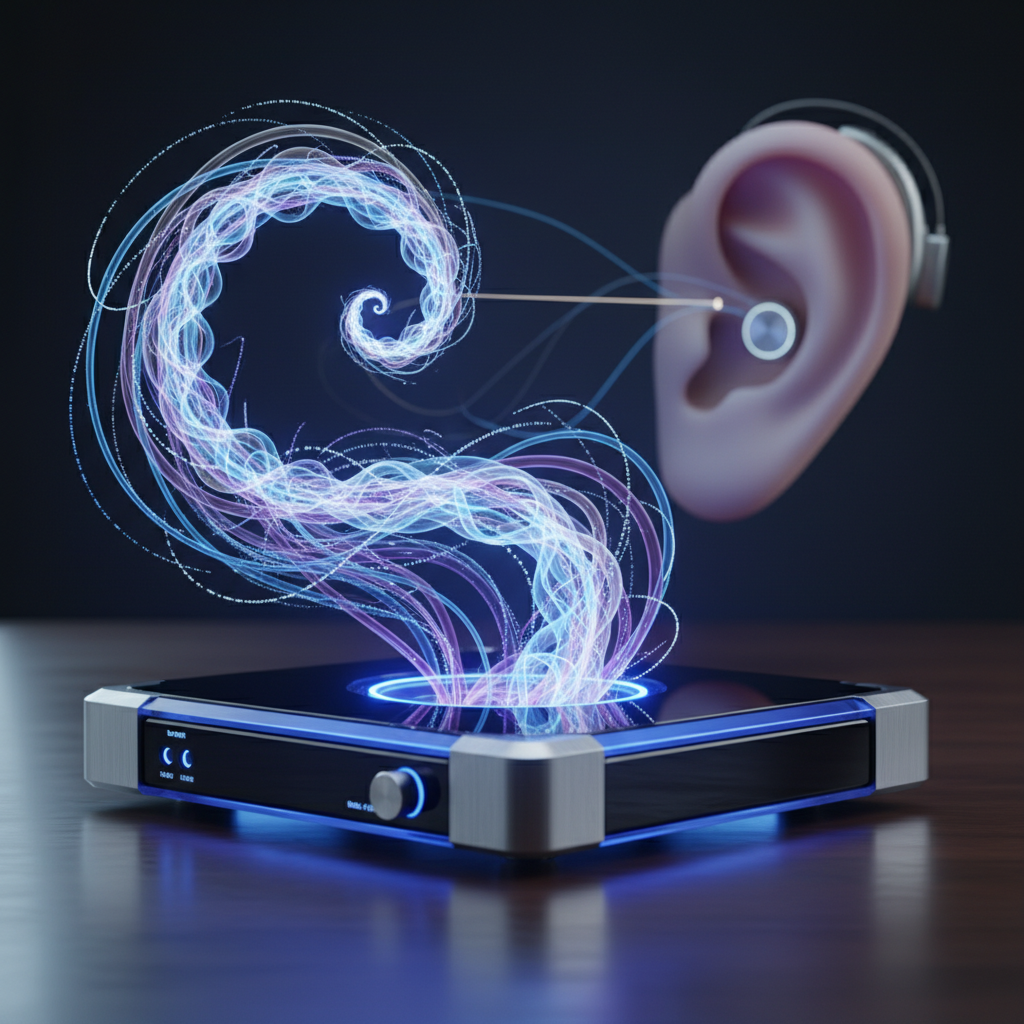
Unleash Your Inner Audiophile: Decoding the World of High-Resolution Audio DACs
In a world saturated with digital sound, the pursuit of pristine audio quality has led many down the rabbit hole of high-fidelity equipment. For discerning listeners, a Digital-to-Analog Converter (DAC) is no longer an obscure acronym but a foundational component. This article dives deep into the realm of high-resolution audio DACs, offering practical insights and demystifying the technical jargon to help you elevate your listening experience.
What is a DAC and Why Does it Matter?
At its core, a DAC translates digital audio signals – those ones and zeros from your computer, smartphone, or streaming device – into the analog waveforms that your headphones or speakers can understand. While every device has a built-in DAC, external and dedicated high-resolution DACs go a step further. They employ superior components, advanced processing algorithms (like oversampling filters), and dedicated power supplies to minimize noise and distortion, resulting in a cleaner, more accurate, and ultimately more enjoyable sound.
Key Specifications: Navigating the Technical Landscape
When selecting a high-res DAC, several technical specifications hold significant weight. Firstly, **sampling rate and bit depth** are crucial. A DAC capable of 24-bit/192kHz or even 32-bit/384kHz sampling rates can reproduce a wider dynamic range and finer details than standard CD quality (16-bit/44.1kHz). Another important spec is the **Signal-to-Noise Ratio (SNR)**. Expressed in decibels (dB), a higher SNR (e.g., 120dB+) indicates less background noise and a purer signal. Finally, consider the **Total Harmonic Distortion plus Noise (THD+N)**, a measure of unwanted noise and distortion. Lower THD+N values (e.g., 0.001%) signify a more faithful reproduction of the original audio. Understanding these metrics empowers you to make informed decisions beyond marketing hype.
Connectivity and Compatibility: Hooking Up Your High-Res Haven
Modern DACs offer a variety of input and output options. Common digital inputs include **USB (Type-B or C)** for connecting to computers and smartphones, **Optical (TOSLINK)** and **Coaxial (S/PDIF)** for integration with media players and TVs. On the output side, you’ll typically find **RCA stereo outputs** for connecting to amplifiers or powered speakers, and often a **3.5mm or 6.35mm headphone jack** for direct listening. Ensure your chosen DAC has the necessary inputs to connect to your source devices and suitable outputs to integrate with your existing audio setup. Some portable DACs also offer Bluetooth connectivity, often supporting high-quality codecs like LDAC or aptX HD for wireless high-res streaming.
Optional Tip: Look for DACs that support **MQA (Master Quality Authenticated)**, a technology that delivers studio-quality audio in smaller file sizes, perfect for high-resolution streaming services like TIDAL or Amazon Music HD. This ensures you’re getting the best possible audio fidelity from your digital music library, truly unleashing your inner audiophile.
