
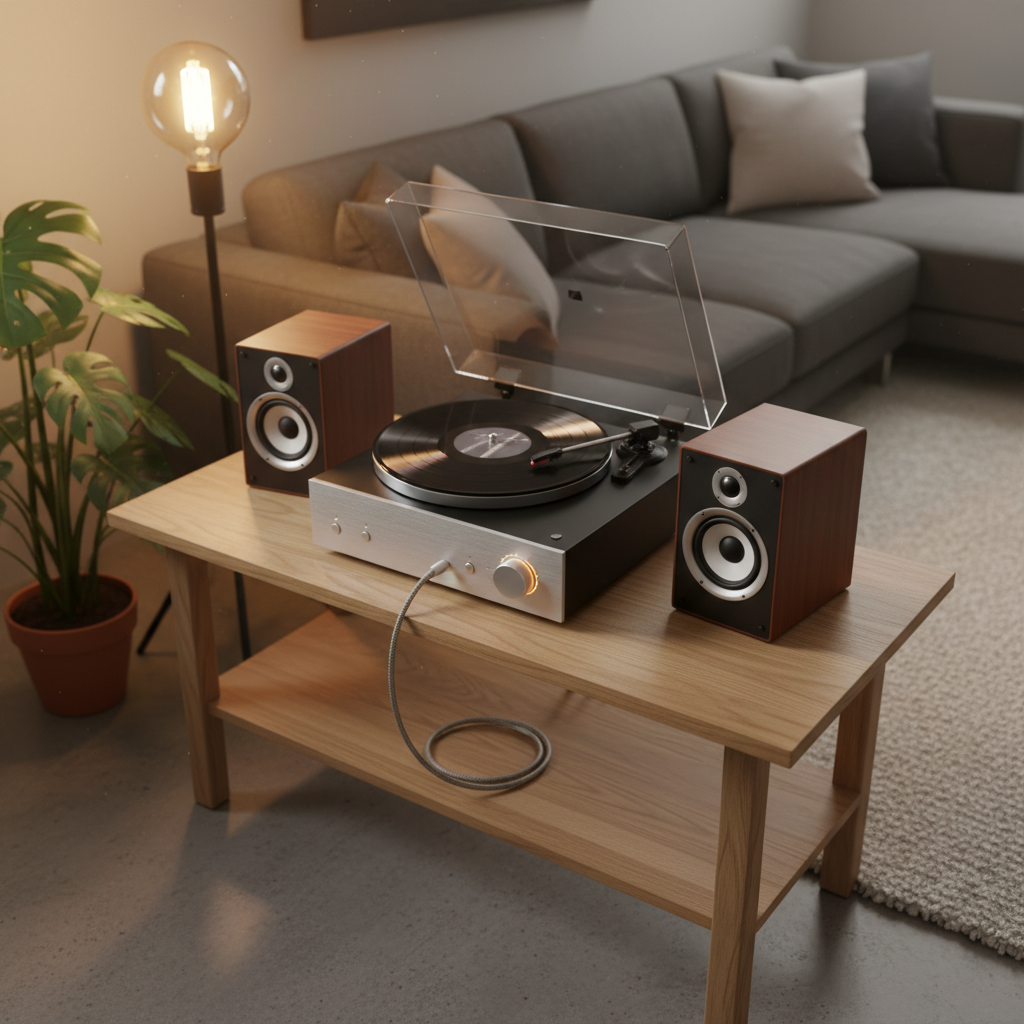
Unlock Your Soundtrack: The Ultimate Guide to Perfecting Your Budget Hi-Fi Setup
Ever dreamed of audiophile-grade sound without the audiophile-grade price tag? This article will guide you through building a high-fidelity audio system on a budget, proving that incredible sound doesn’t require emptying your bank account. We’ll focus on smart component choices, understanding key specifications, and optimizing your listening environment.
Choosing Your Foundation: The Amp and Speakers Sweet Spot
The heart of any hi-fi system is the amplifier and speakers. For budget-conscious audiophiles, a used stereo amplifier, often an integrated amplifier, can offer incredible value. Look for models with a THD (Total Harmonic Distortion) of 0.05% or less for clean sound. Brands like NAD, Marantz, or Yamaha from the 90s and early 2000s often provide excellent performance. When selecting speakers, consider passive bookshelf speakers. Their smaller size often means better value for sound quality. Pay attention to sensitivity – speakers with a sensitivity of 88dB/W/m or higher are easier for lower-powered amplifiers to drive, meaning you’ll get more volume and impact with less effort from your amp.
The Source Material: Where Your Music Lives
Your source device significantly impacts sound quality. While dedicated CD players are excellent, a modern, budget-friendly option is a high-quality DAC (Digital-to-Analog Converter) paired with a streaming device or computer. A DAC like the Topping E30 II, with its S/N Ratio (Signal-to-Noise Ratio) of 121dB, can transform digital audio into a much richer analog signal. If streaming from your phone, ensure you’re using lossless formats like FLAC or ALAC for optimal fidelity, rather than lossy MP3s that discard audio information.
Beyond the Gear: Optimizing Your Listening Environment
Even the most expensive equipment will sound subpar in a poorly treated room. Simple, budget-friendly room treatments can dramatically improve your sound. Experiment with speaker placement, moving them away from walls to reduce bass boom. Heavy curtains, rugs, and even strategically placed bookshelves can absorb reflections and reduce echo, leading to a clearer, more defined soundstage. Angling your speakers slightly towards your listening position (toe-in) can also enhance stereo imaging.
Cables and Connectors: Don’t Break the Bank, But Don’t Skimp
While exotic audiophile cables can be wildly expensive with questionable benefits, using decent quality cables is important. For speaker wire, 14-gauge or 16-gauge oxygen-free copper (OFC) wire is sufficient for most setups under 100 watts per channel. For RCA interconnects between components, look for well-shielded cables to prevent interference. You don’t need to spend a fortune, but avoid the cheapest, thinnest options. A good quality, braided copper wire for speaker connections, for example, provides more reliable signal transfer than thin, poor-quality alternatives.
Tip: Explore an app like “Room EQ Wizard” (REW) with a basic USB microphone to analyze your room’s acoustics and pinpoint problematic frequencies for targeted, budget-friendly treatment using household items or DIY panels. This can dramatically improve sound quality beyond just component upgrades.
